“My Student Said She Was Carrying My Dead Husband’s Child—But the Real Horror Began When I Found Out How She Got the Proof…”
The day Renee Blue told me she was carrying my husband’s child, something inside me didn’t just break—it unraveled.
Even now, when I try to replay that moment, it doesn’t feel real. It feels like a scene I watched from a distance, detached from my own body, as if my mind had stepped aside to protect itself from something it couldn’t possibly understand.
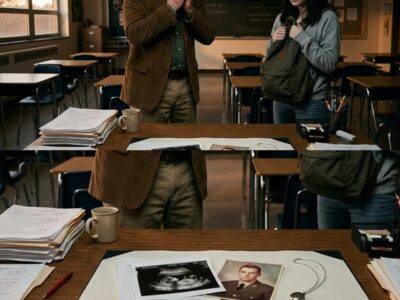
It was late. Nearly six in the evening. The kind of quiet that only happens in a school after everyone has gone home, when the energy drains out of the hallways and leaves behind a hollow stillness. The fluorescent lights hummed faintly above me, flickering just enough to be irritating, not enough to be noticed unless you were already on edge.
I was grading essays.
That detail stays with me because of how ordinary it was. Red pen in hand, reading arguments about symbolism and theme, trying to decide whether a paragraph deserved a B-plus or an A-minus. It was routine. Predictable. Safe.
Then came the knock.
Soft. Hesitant.
When I looked up, Renee stood in the doorway, her figure half-lit by the hallway lights behind her. She looked smaller than usual, like something had pressed the air out of her. Her backpack hung loosely from one shoulder, and both her hands gripped the strap so tightly her knuckles had turned pale.
There was something wrong.
I had noticed the changes in her weeks earlier. Missed assignments. Late arrivals. The quiet withdrawal of a student who used to sit up front and engage with everything. When I asked, she told me about her mother’s illness—uremia, severe enough to keep her from working consistently. The kind of situation that doesn’t just strain a family financially, but emotionally, too.
I had given her money.
Not a lot, but enough for groceries, maybe a bus ride to the hospital. She had cried when I handed it to her, her gratitude so overwhelming it made me uncomfortable. I told myself she was just stressed, just overwhelmed.
I didn’t know how much deeper it went.
“Mrs. Hart,” she said, her voice trembling, “I need to tell you something, and you have to let me finish.”
There are moments in life when something shifts before anything actually happens. A subtle tightening in your chest. A quiet sense that whatever comes next will matter more than you’re prepared for.
I felt it then.
I set my pen down.
“Of course,” I said gently.
She walked in slowly and sat in the front row, directly facing me. The distance between us felt too short and too wide at the same time.
“I’m pregnant,” she said.
The words landed heavily, but they made sense. Not in a good way, not in an easy way—but in a way that fit the world as I understood it. A struggling student, a sick parent, too much responsibility, not enough support. It was tragic, but it was real.
I softened my tone.
“Have you seen a doctor?” I asked. “Does your mother know?”
She shook her head slightly, her eyes fixed on mine.
“That’s not the part you need to hear.”
And just like that, the ground shifted.
There was something in her voice—not just fear, but certainty. A kind of determination that didn’t belong to someone confessing a mistake. It belonged to someone revealing a truth.
A cold sensation spread through my chest.
“The baby,” she said quietly, “is your husband Daniel’s.”
For a moment, everything stopped.
Not slowed. Not blurred.
Stopped.
My mind rejected the sentence before I could even process it. It was like hearing a language I didn’t understand—familiar sounds arranged in a way that made no sense.
“That is not funny,” I said.
The sharpness in my voice surprised even me.
“I’m not joking.”
I stood up so quickly my chair scraped harshly against the floor.
“Renee,” I said, forcing each word out carefully, “my husband died seven years ago.”
Seven years.
I had counted them. Lived through each one. I had stood beside his coffin, my hand resting on polished wood that felt too smooth, too final. I had chosen the suit he wore because it was the one he liked best, even though he would never wear it again.
I had learned how to exist without him.
“You weren’t even old enough to drive,” I continued, my voice tightening, “when he died.”
Tears filled her eyes, but she didn’t look away.
“I know how it sounds,” she said. “That’s why I brought this.”
Her hands trembled as she reached into her bag and pulled out an envelope.
She placed it on my desk.
I hesitated before opening it, a strange reluctance creeping into my fingers. As if touching whatever was inside would make this real in a way I couldn’t undo.
But I opened it anyway.
The first thing I saw was a sonogram.
Grainy. Black and white. Indisputable.
Behind it was a list of medical appointments from a private clinic. Dates. Notes. Names.
And then—
The photograph.
My breath caught.
It was Daniel.
Not just Daniel—but Daniel as I knew him. Candid. Unposed. Standing near the lake cabin, his hair slightly damp from the rain, his expression caught somewhere between laughter and thought.
I had taken that photo.
No one else had it.
I turned it over.
Still us. Always.
His handwriting.
My knees nearly gave out.
“That’s not possible,” I whispered.
But Renee wasn’t finished.
She reached beneath her sweater and pulled out a chain.
At the end of it hung a silver compass pendant.
I felt the world tilt.
I had placed that pendant in his memorial box after the funeral. I remembered the moment clearly—how cold it felt in my hand, how final it was to close the lid.
No one had touched it since.
No one should have.
“Mrs. Hart,” Renee said softly, “I can prove he’s connected to this.”
I should have walked away.
I should have called someone—an administrator, a counselor, anyone who could step in and ground the situation in reality.
But I didn’t.
Because something deep inside me, something I didn’t want to acknowledge, was already asking the question I was too afraid to voice.
How?
The answer didn’t come all at once.
It unfolded slowly, painfully, over the next several days.
Renee told me about a man who had helped her.
Not in the way I first feared—but in a way that was somehow more disturbing. A man who had approached her months earlier, offering assistance when her mother’s condition worsened. He knew details about her life he shouldn’t have known. He spoke about me—not directly, but enough to make it clear he was familiar.
He had given her the pendant.
The photograph.
Eventually, the money for medical visits.
“He said it mattered,” she told me. “He said this baby mattered.”
I listened, trying to separate truth from delusion, fact from manipulation.
And then she told me his name.
Daniel.
Not my Daniel.
But someone who knew him.
That was the thread that changed everything.
It led me back to things I had avoided for years. Old files. Old conversations. Details from the time before his death that I had dismissed as irrelevant in my grief.
Daniel had worked in medical research.
There had been projects—confidential ones. Studies involving genetic material, experimental preservation methods, things I hadn’t fully understood at the time.
Things I hadn’t questioned.
Until now.
The truth, when it finally surfaced, was not what I expected.
It wasn’t supernatural.
It wasn’t impossible.
It was worse.
Before his death, without fully explaining it to me, Daniel had donated genetic samples to a research program—one that had quietly continued after he was gone. That program had been accessed, manipulated, and ultimately exploited by someone who believed they were creating something meaningful.
Something significant.
Renee had been chosen.
Not randomly—but deliberately.
Because she was vulnerable.
Because she needed help.
Because she trusted the wrong person.
The man who approached her hadn’t been honoring Daniel’s memory.
He had been using it.
The pregnancy was real.
The connection, in a biological sense, was real.
But the story Renee had been told—the idea that my husband was somehow still present, still involved—was a carefully constructed illusion.
A lie designed to make the truth easier to accept.
When I finally explained it to her, she didn’t cry.
She listened.
Quietly.
The same way she had walked through that hallway. The same way she had spoken to me that evening.
And when I finished, she nodded.
“So it’s not him,” she said.
“No,” I answered gently. “It never was.”
She looked down at the pendant in her hand, turning it slightly so the light caught its surface.
For a moment, I thought she might break.
But she didn’t.
Instead, she set it down.
And in that small, deliberate motion, something shifted.
Not just for her.
For me, too.
Because grief has a way of leaving doors open—small ones, hidden ones, the kind you don’t notice until someone walks through them.
And when they do, they don’t always bring truth with them.
Sometimes, they bring something that looks like hope.
But isn’t.
The real miracle, I realized, isn’t in believing the impossible.
It’s in having the strength to face what’s real, even when it hurts more than anything else.
Renee’s life would never be simple.
Neither would mine.
But as we sat there in that quiet classroom, the same place where everything had first unraveled, there was something steady beneath the weight of it all.
Not certainty.
Not closure.
But truth.
And sometimes, that’s the only place you can begin again.
News
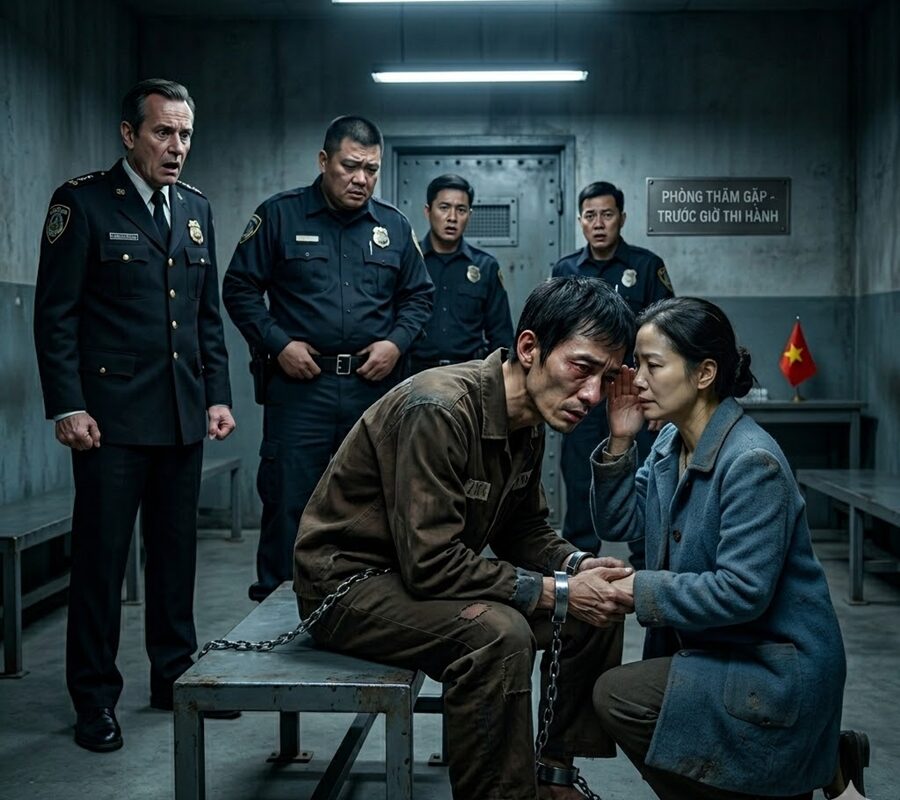
“An 8-Year-Old Whispered One Sentence Before Her Father’s Execution—Seconds Later, the Guards Froze… Then She Pulled Out a Tape and Everything Changed”
The hour before an execution is supposed to follow a script. Everything is measured, documented, and controlled down to the smallest detail. There are forms to sign, final checks to…
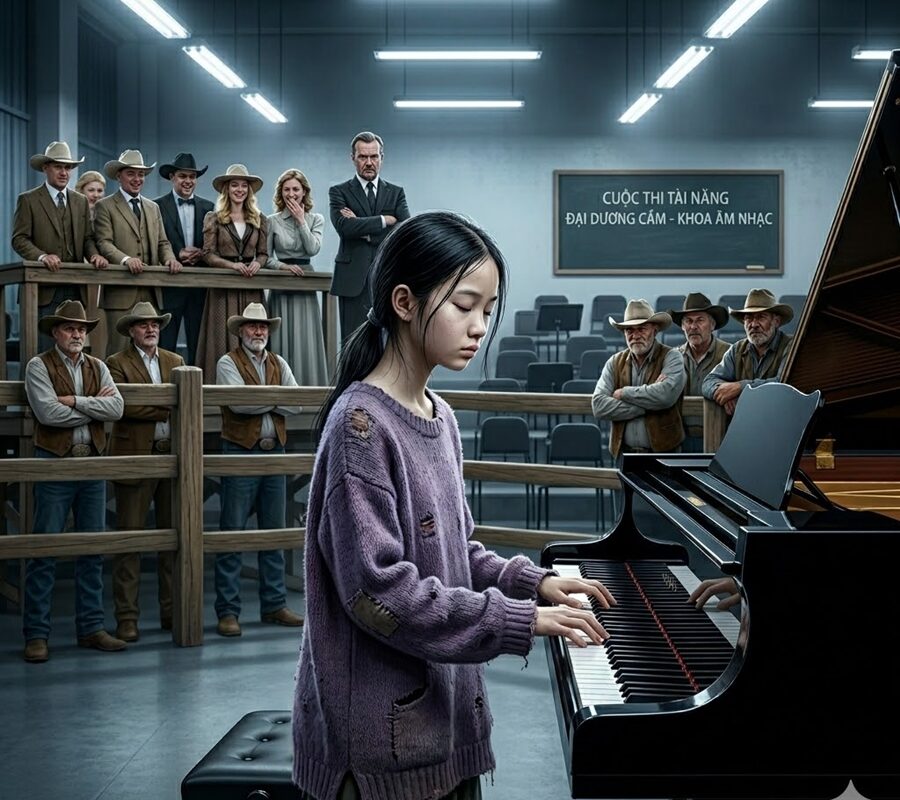
“They Laughed When the ‘Poor Girl’ Touched the Piano—But What Happened at the Final Note Left the Entire Room Frozen…”
The silence in Room 204 didn’t just sit in the air—it pressed down on everything, thick and suffocating, like the room itself was holding its breath. Even the faint hum…
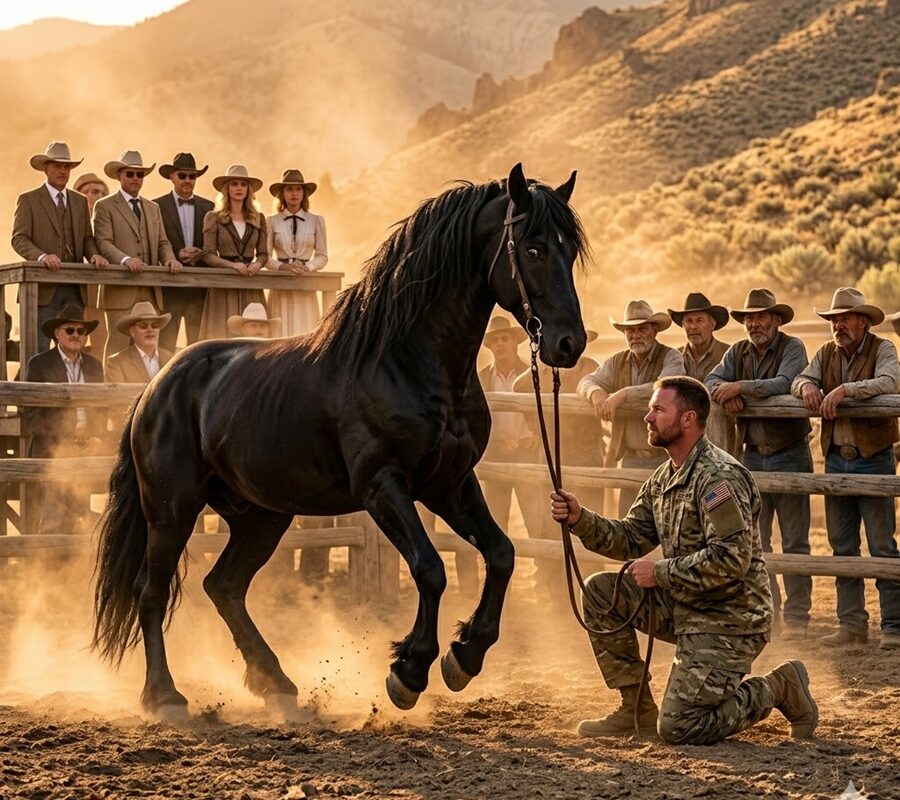
A Billionaire Sent a Stable Boy Into a Pen With a Killer Stallion—But When the Horse Suddenly Froze, What Happened Next Left Everyone Watching Completely Speechless…
In the Bitterroot Valley, people believed in a few simple truths. Fire burns. Rivers run cold. And once a horse earned the name Widowmaker… it never stopped being one. The…
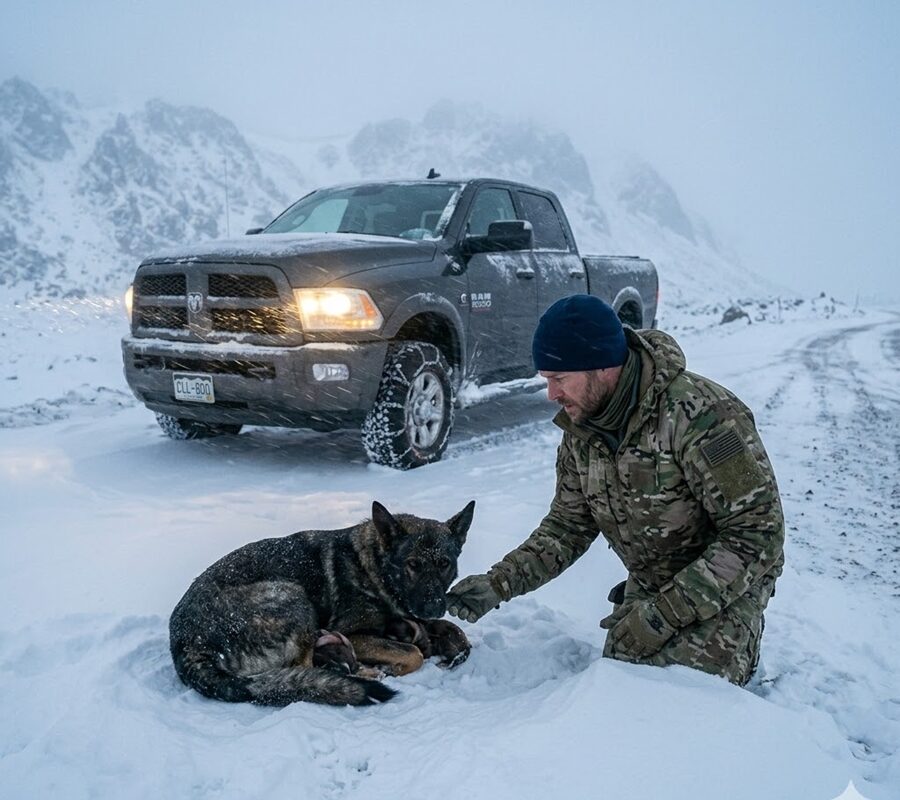
A Navy SEAL Pulled a Dying Dog and Her Puppies From a Blizzard—But When Vets Revealed What She Had Really Been Protecting, He Was Left Completely Speechless…
Ethan Cole had learned long ago that silence could be more dangerous than gunfire. In war zones, silence usually meant something was wrong. Too late. Too close. Too inevitable. But…
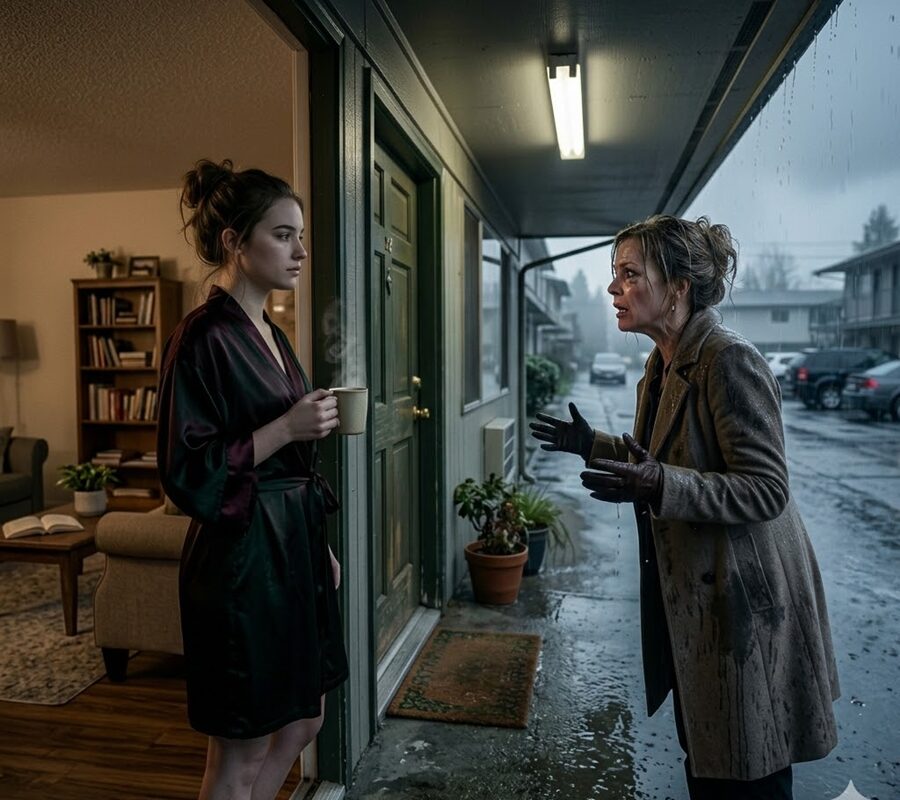
My Mother Skipped My Wedding for a Hawaii Vacation—But When She Showed Up 3 Days Later Screaming at My Door, She Realized I Had Already Taken Everything She Owned…
The knocking didn’t start as a knock. It started as a warning. A steady, violent rhythm against the front door of my Seattle apartment—sharp enough to cut through the rain,…
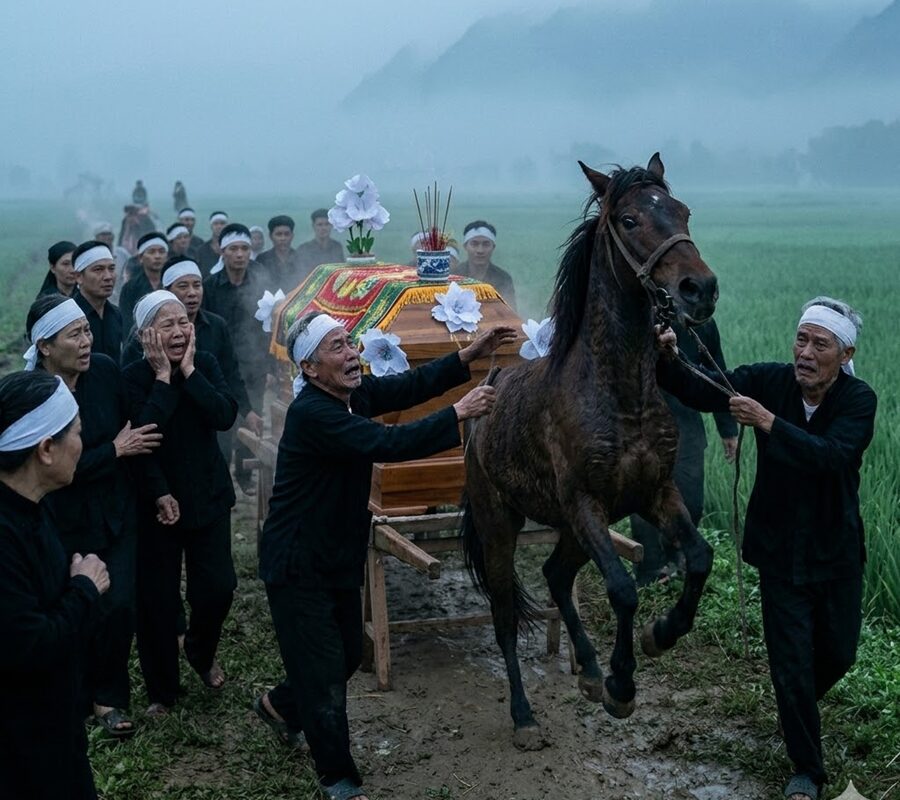
A Horse Attacked His Owner’s Coffin at a Funeral—But When the Lid Finally Cracked Open, the Sound From Inside Left the Entire Village Frozen in Shock…
In the village of Alder Creek, people believed in signs. Not the loud kind. Not miracles written in fire or thunder. But small things. Subtle things. A shift in the…
End of content
No more pages to load